
Archetypes and Female Friendships
A deeper look into how ancient inner forces shape our closest bonds
In our previous blog Through the Lens of Friendships, we explored how female friendships are shaped not just by shared memories or personal values, but also by the unseen psychological patterns we carry—archetypes that influence how we show up in relationships.
Whether we’re the quiet observer or the outspoken protector, each of us moves through the world with a constellation of inner characters. These archetypes shape how we give, receive, compete, connect, retreat, or fiercely show up for our friends.
This follow-up dives into those internal figures—Athena, Artemis, Demeter, Aphrodite, and more—and how their energies affect the way we relate to the women in our lives. Do we nurture too much and expect devotion in return? Do we avoid emotional closeness by staying intellectually distant? Do we silently compare ourselves to our friends while pretending everything’s fine?
By meeting these archetypes within ourselves, we begin to better understand the dynamics in our female friendships—why some last lifetimes and others unravel without closure.
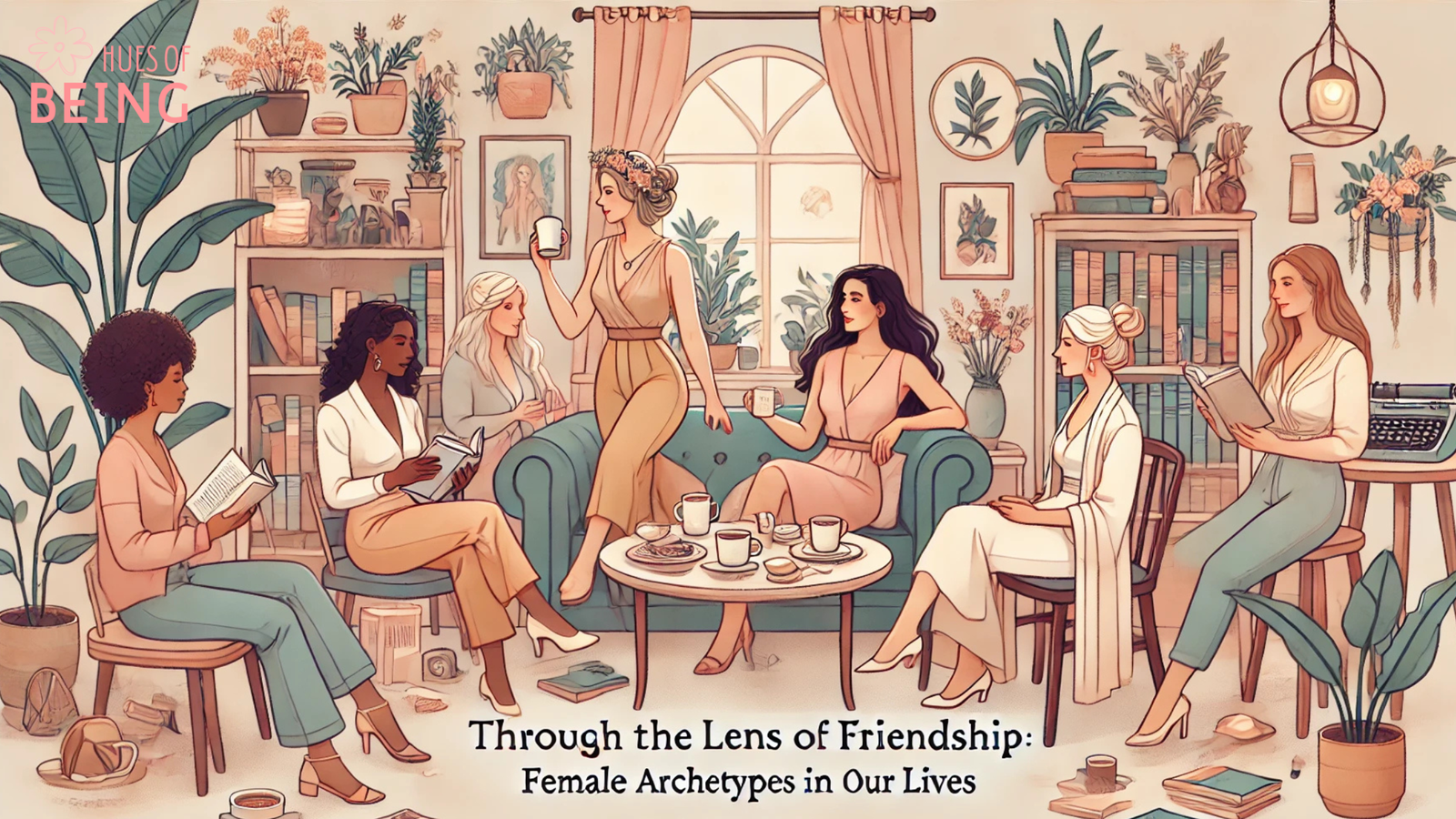
So let’s sit with these timeless energies like tea guests around the table, and see what each has to reveal about the love, conflict, joy, and complexity of being friends who are women.
Athena – The Strategist and Career Woman
Athena embodies logic, independence, and wisdom. She’s the intellectual powerhouse—the one who thrives in professional fields and values rationality above all. Her statue stands at Columbia University, USA, summoning the minds that seek knowledge to improve the world.
Shadow side? Choosing intellect over emotion. Often, Athena-type women suppress or belittle the “softer” sides of themselves due to internalized patriarchy, leading to emotional isolation or burnout.
“She doesn’t play Cinderella.”
A return to creativity, play, and personal rituals can restore emotional balance for the Athena woman.
Athena is the friend who always has a plan. Rational, achievement-driven, and grounded in logic, she brings clarity, direction, and fierce loyalty—especially in professional or intellectual spaces. She’s the one you call when you need honest advice, not emotional indulgence.
But Athena can struggle to express vulnerability. Her preference for logic over emotion might make her appear cold or detached in moments of deep need. She may downplay her own emotional experiences—or yours—in favour of “fixing it.”
In friendship: She may inadvertently dismiss the emotional layers of your experience. Learning to soften, listen without solving, and show emotional presence can strengthen her bonds.
Artemis – The Independent & Protector of Women
Goddess of the hunt and the wilderness, Artemis is fiercely independent and devoted to her purpose. She roams freely, often misunderstood for her intensity and solitude.
Her challenge? Emotional intimacy and conflict with male energy—often echoing father-daughter wounds. Artemis-type women may bring competitiveness into relationships, and may need to learn the balance between activism and humility.
Healing arrives when Artemis can soften her vigilance and reorient toward inner peace, not just outer justice.
Artemis is the solo traveler, the one who stands up for what’s right and protects the underdog. She’s the kind of friend who shows up to fight your battles—and her own. Deeply loyal to her values, Artemis women can form tight-knit circles of strong, idealistic friendships.
Yet, emotional intimacy may be tough terrain. Conflict with female friends might unconsciously mirror unhealed dynamics with authority or family.
In friendship: Artemis may need to learn how to let others show up for her, not just the other way around. Trusting softness doesn’t mean weakness.
Hestia – The Keeper of the Hearth
Hestia is the quiet flame—the goddess of the sacred home and inner peace. Cleaning the house is no small matter for her; it reflects her inner alignment.
She avoids emotional drama, seeks flow states, and values simplicity over ambition. Yet her challenge lies in confronting a noisy outer world that undervalues silence. In relationships, her quiet withdrawal may be mistaken for passivity.
Her healing? Speaking up when her peace is threatened. Choosing connection over silence, even in discomfort.
Hestia is the hearth—steady, reflective, and deeply private. She may not be loud or social, but her presence in your life brings grounding. She listens without judgment, keeps confidences, and brings an almost meditative calm into her friendships.
But Hestia may also pull away during conflict. She avoids drama and may choose silence over speaking up when hurt. Her friends might mistake this for apathy or disinterest.
In friendship: Hestia learns that boundaries can co-exist with connection. Her friendships thrive when she finds the courage to voice her needs and discomforts.
Hera – The Wife and Partner
Hera, goddess of marriage, values commitment, loyalty, and respect in partnerships. A Hera woman may dream of being deeply seen by her spouse, placing great value on the sacred bond of union.
But when neglected? Hera’s shadow emerges in jealousy, criticism, and controlling behavior. She may project rage onto other women instead of addressing the root disconnection with her partner.
Her healing path lies in redirecting that rage into creative expression—and reclaiming her inner strength outside of a relationship status.
Hera is deeply invested in her friendships, valuing consistency, commitment, and mutual honour. She’s the friend who remembers anniversaries, shows up for your family, and wants to build something enduring in the relationship.
Her shadow can emerge when loyalty turns into possession. If she feels excluded or undervalued, she may lash out—especially toward other women perceived as “threats.” Jealousy can creep in when friendship dynamics shift or deepen elsewhere.
In friendship: Hera learns that love doesn’t have to be territorial. When she channels her loyalty into emotional maturity, she becomes the unwavering pillar in a friend group.
Demeter – The Nurturer and Mother
Demeter is the giver, the caregiver, the one who pours from her own cup to nourish others. She represents the divine mother energy, embodying generosity, sacrifice, and deep grief in loss.
Shadow side? Overgiving until depletion. Emotional manipulation masked as care. Staying in relationships out of pity.
Demeter women often struggle to let go, fearing abandonment. True healing arrives when they turn their nurturing inward and trust others to grow and thrive on their own.
Demeter gives everything—her time, her care, her attention. She’ll remember your coffee order, show up during your worst days, and send a healing playlist after your breakup. Her warmth is unmatched.
Yet, Demeter’s shadow lies in overgiving. She may struggle with boundaries, feel hurt when her efforts aren’t reciprocated, or subtly guilt-trip friends who become more independent. Her nurturing may morph into over-functioning.
In friendship: Demeter’s growth lies in reclaiming her energy, practicing mutual care, and trusting that letting go isn’t abandonment—it’s belief in the other’s strength.
Persephone – The Maiden & Queen of the Underworld
Persephone is transformation embodied. Receptive, intuitive, and often deeply empathetic, she journeys through darkness to emerge with wisdom.
But she can get stuck in the dark—romanticizing chaos, or feeling powerless in depression or dependency.
As Carolyn Elliott writes in Existential Kink, embracing the erotic charge of our shadow (including taboo or painful patterns) can transmute shame into personal power. Persephone teaches us to dance with the dark—and still return to light.
Persephone is the friend who “just gets you.” She lives in the layers—of emotion, dreams, symbolism. She is attuned to subtle cues and offers deep, soulful presence.
But when ungrounded, Persephone may romanticize pain, avoid direct conversations, or get stuck in cycles of self-doubt. She can retreat during her own darker seasons, leaving friends unsure how to reach her.
In friendship: Persephone thrives when she embraces both her emotional depths and her agency. Her healing gifts become stronger when she learns from her transformations—and let others in.
Aphrodite – The Lover & Creative Spirit
Aphrodite lives for beauty, connection, and creation. She is love, sensuality, and the spark of life itself. Her presence births romance, art, pleasure, and vision.
But her shadow? The fear of aging. The constant need for desirability. A tendency to chase connection without grounding.
Chelsea Wakefield, in In Search of Aphrodite, reminds us that the antidote to boredom is adventure. Aphrodite thrives not in being adored—but in falling in love with life, again and again.
Aphrodite brings play, passion, and creative spark into friendships. She’s the one who uplifts you with spontaneous joy, and believes in your magic even when you don’t.
Her challenge? She may avoid discomfort or fade when friendships become emotionally heavy. Her focus on beauty and desire might make her feel insecure in friendships where she no longer feels admired or central.
In friendship: Aphrodite blossoms when she anchors herself beyond attention or approval, nurturing friendships as sacred containers for both joy and repair.
Closing Circle: Your Archetypes, Your Inner Circle
In every group of friends, these archetypes weave in and out—sometimes one dominates, other times they blend. You may see yourself shifting between Demeter in one friendship and Athena in another.
The invitation is not to label, but to understand.
To explore how your friendships are shaped by your own evolving mythologies.
What do your friendships look like when they are rooted in awareness, rather than expectation?
Point of Reflection:
-
Which archetype feels most active in your current life?
-
Which do you see in your closest friends or relationships?
-
Does this lens help soften judgment and build acceptance?
We’d love to hear from you. Which archetype would you like us to explore in more depth next?
Drop us a line—or simply keep walking your myth, one chapter at a time.